After loosing radio communication with the Ground Controller, the crew were on their own. Standard operating procedure was to bail out of the aircraft. However, the crew decided against this.
What navigation options did the crew have? And what chance did they have of success?
Radio Navigation Aids
The Meteor was equipped with two radios, each capable of operating on 10 channels. The NF 13 was the first variant to feature a radio compass, so was absent in the NF11.
This is contradicted by images here, which show an ADF station fitted in the cockpit of an NF11, but that had been refitted as a target tow.
The definitive guide can be found in the NF 11 pilots operating handbook:
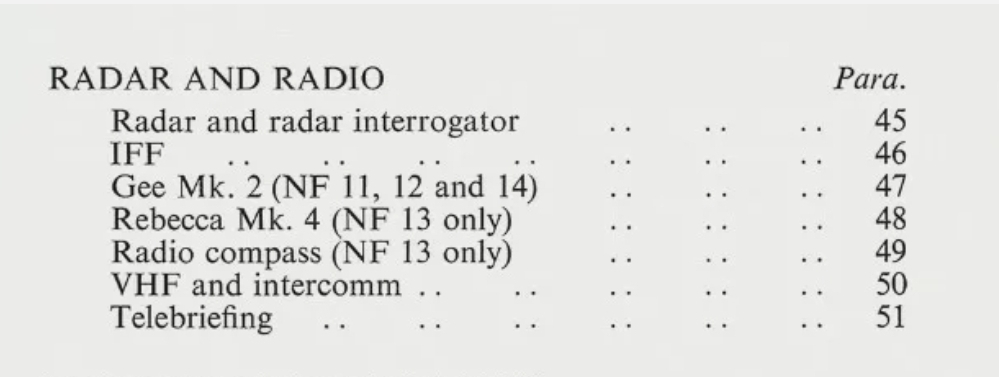
Here we see that the subsequent NF13 ws much better equipped, but that the NF11 was fitted with Gee Mk 2.
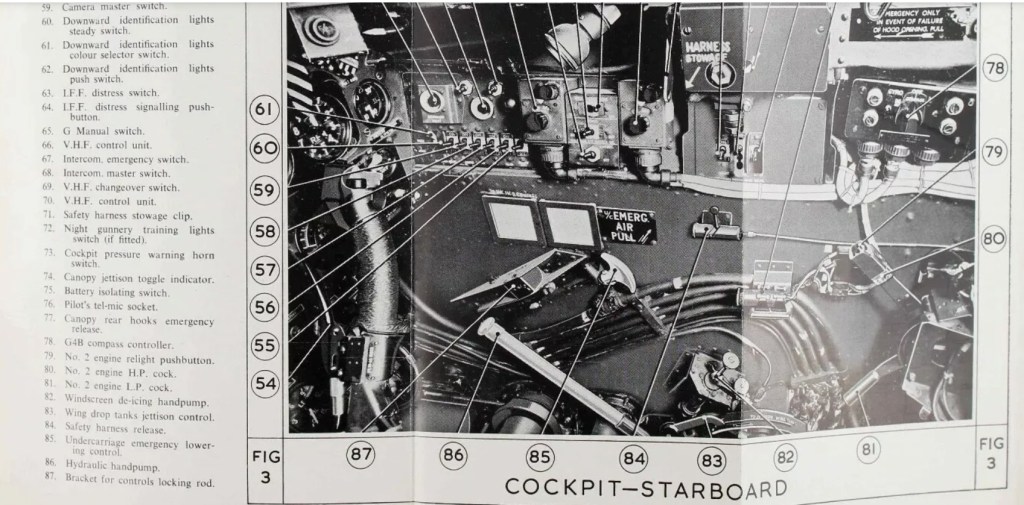
Another excerpt from the operating handbook reveals that the aircraft has a G4B type compass. This is the control unit for the gyroscopic compass on the main instrument panel and not a radio navigation aid.
More Information
- Gee Mk ii
- The Gee network in 1954
- Radar Navigation
- Astral Navigation
Navigator Training
“We were officer cadets at South Cerney and then became acting pilot officers at 2 Air Navigation School (ANS) Hullavington, where we stayed from April to December 1962. There were Valetta flying classrooms which were used for teaching equipment like GEE and astro navigation, so that one instructor could teach 10 or 12 students; then we went onto Varsities”
Mike Sayer, “The Meteor Boys” p. 159 Steve Bond
 Gloster Meteor WD778